Building a Direct Booking Engine
Many hotels still approach marketing as a series of disconnected actions. A campaign here. A promotion there. A seasonal push when occupancy drops.
But direct bookings don’t grow through isolated efforts. They grow when every element works together as a system.
In Destinova Insights | Issue #7, we explore how hotels move from short-term campaigns to a sustainable direct booking engine — one that operates continuously, intelligently, and profitably.
The Campaign Trap
Campaigns feel productive. They create activity, urgency, and short-term spikes.
But they also create problems:
- No continuity in communication
- No cumulative learning
- No long-term traveler relationship
- Constant dependency on discounts or urgency tactics
Hotels end up restarting the same effort again and again — without building momentum.
What a Direct Booking System Really Is
A direct booking engine is not a single campaign. It’s a connected ecosystem where:
- Segmentation defines who you speak to
- Personalization shapes how you speak
- Timing intelligence determines when you speak
- Content gives meaning to the message
- Measurement reveals what works and what doesn’t
When these layers operate together, communication becomes consistent, relevant, and compounding.
Each email doesn’t start from zero. It builds on everything that came before.
How the Destinova System Works
At Destinova, we don’t run campaigns in isolation. We build direct booking systems designed to evolve with every interaction.
Each traveler interaction feeds the system:
- Engagement updates segmentation
- Segmentation informs personalization
- Personalization improves timing accuracy
- Timing increases conversion probability
- Conversion data refines future content
This creates a self-optimizing loop — where performance improves over time without increasing pressure on budget.
Case Study: From Sporadic Campaigns to Predictable Revenue
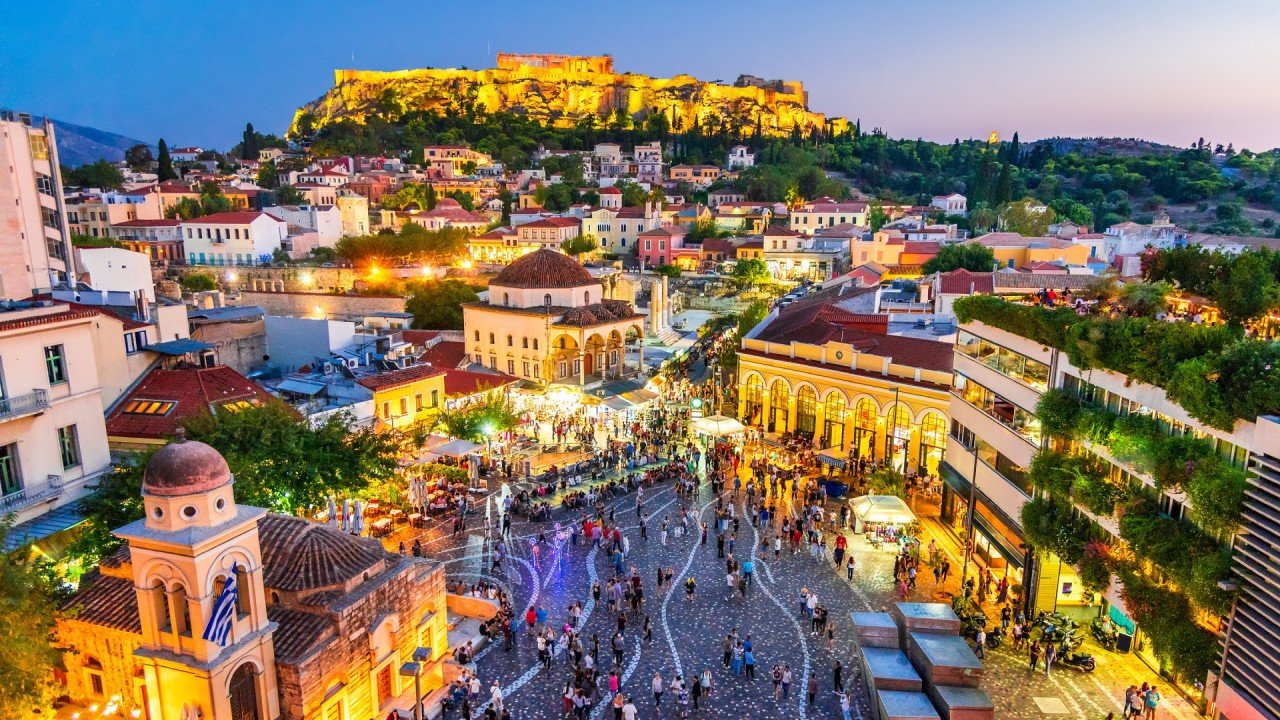
A city hotel relied on last-minute campaigns to fill occupancy gaps. Results were inconsistent and heavily discount-driven.
After transitioning to a system-based approach:
- Communication became continuous, not reactive
- Content evolved based on traveler behavior
- High-intent segments received priority focus
- Discounts were replaced with experience-led messaging
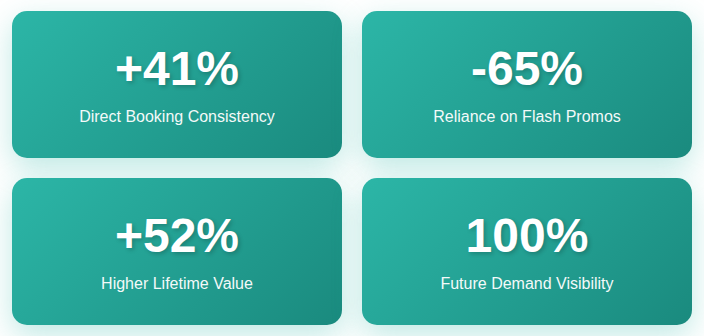
Results:

 The Visibility Trap 21 Apr 2026