What Smart Hotels Do Differently
In most hotels, marketing begins with the right intention: to increase bookings.
But in reality, it begins with the wrong question.
❌ Which channels should we use?
❌ How much budget should we allocate?
The real question is much simpler — and far more critical:
Who are we trying to reach, and where are they in their decision journey?
Without this clarity, every campaign becomes noise.
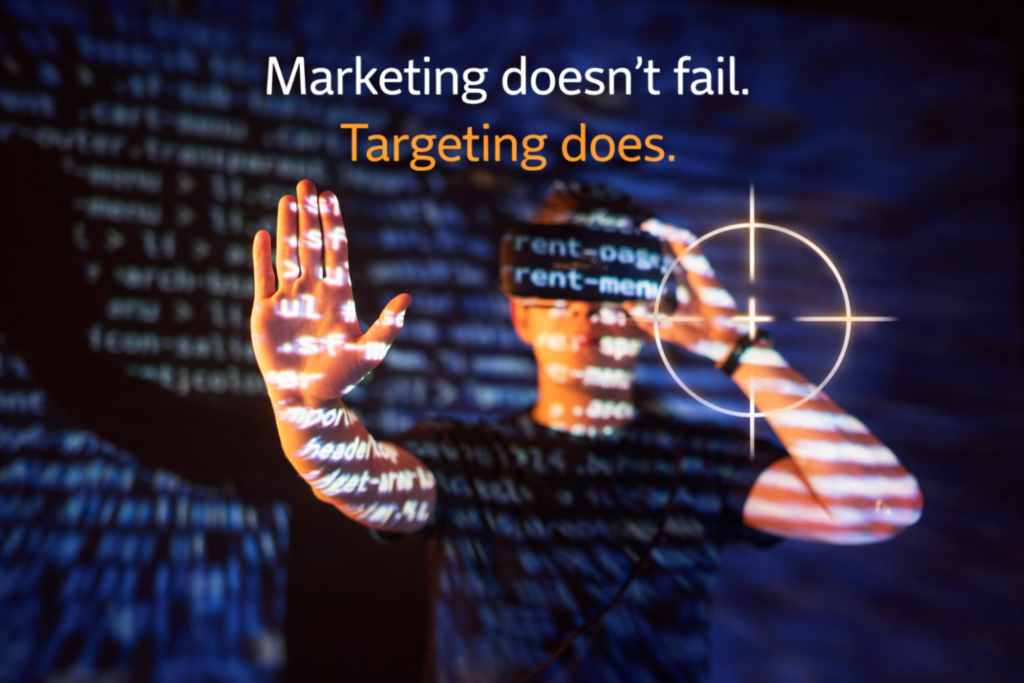
Marketing doesn’t fail. Targeting does
Travelers are not uninterested. They are overexposed.
They’ve seen:
- the same visuals
- the same promises
- the same “limited offers”
And they’ve learned to ignore anything that isn’t immediately relevant.
The problem is not demand. The problem is relevance.
The dangerous illusion of the “broad audience”
The larger the audience, the more generic the message becomes. And the more generic the message, the less it converts.
A family resort, a boutique adults-only hotel, and a city hotel cannot speak to the same traveler — no matter how good the creative looks.
Yet most campaigns still try.
The mindset shift hospitality needs in 2026
Modern hospitality marketing does not start with the hotel. It starts with traveler behavior.
- Different messages for early planners
- Different messages for last-minute bookers
- Different messages for experience-driven travelers
- Different messages for price-driven travelers
When these differences are ignored, results become accidental.





 The Visibility Trap 21 Apr 2026