
In summer, Rhodes is about beaches and long evenings. From November, the island shows a different side. The crowds thin out and the light softens. The island's layered history, from Dorian city-states to the Knights of St John, finally has room to breathe. The sea may be too cool for most swimmers, but the stone streets, hilltop acropolises and quiet ruins are at their most rewarding now.
One thing to plan around: from 1 November to 31 March, Rhodes' state-run sites switch to shorter winter hours and close on Tuesdays. The upside is that entry is free on the first and third Sunday of each month in that period. Here are six places worth building a slow winter trip around.
Wander the Medieval City (Old Town)
The walled Old Town has been a UNESCO World Heritage Site since 1988. It's one of the few places where you can still walk through a working medieval city. The Knights built the upper town, Castello, with its Gothic inns lining the Street of the Knights. Below it, the old Burgus mixes Gothic houses with Ottoman mosques, baths and the synagogues of the former Jewish quarter. Wandering the lanes costs nothing, and in winter you'll often have whole alleys to yourself. One caveat: the ticketed walk along the fortification walls closes for the winter season.
The Palace of the Grand Master
At the top of the Street of the Knights sits the palace. Building began in the early 14th century, shortly after the Knights of St John settled on Rhodes, and it served as the seat of the Grand Masters. An explosion in 1856 left it badly damaged, and the Italian administration restored it in the early 20th century. Today the ground floor holds two permanent exhibitions on ancient and medieval Rhodes, and upstairs are mosaic floors brought from Kos. Winter hours (1 November to 31 March) are 08:30–15:30, closed on Tuesdays. Tickets are €20 full and €10 reduced. Check before you travel.
The Archaeological Museum in the Knights' Hospital
The building is half the reason to come. The great hospital of the Knights was built between 1440 and 1489, a Gothic structure with Renaissance touches. Inside, look for the colossal head of Helios, the much-loved Bathing Aphrodite, and Mycenaean jewellery from Ialysos and Kamiros. Upstairs are the Knights' carved tombstones and coats of arms. It's an easy stop on a grey or windy afternoon. Winter hours (1 November to 31 March) are 08:30–15:30, closed on Tuesdays. Tickets are €10 full and €5 reduced. Check before you travel.
The Acropolis of Lindos
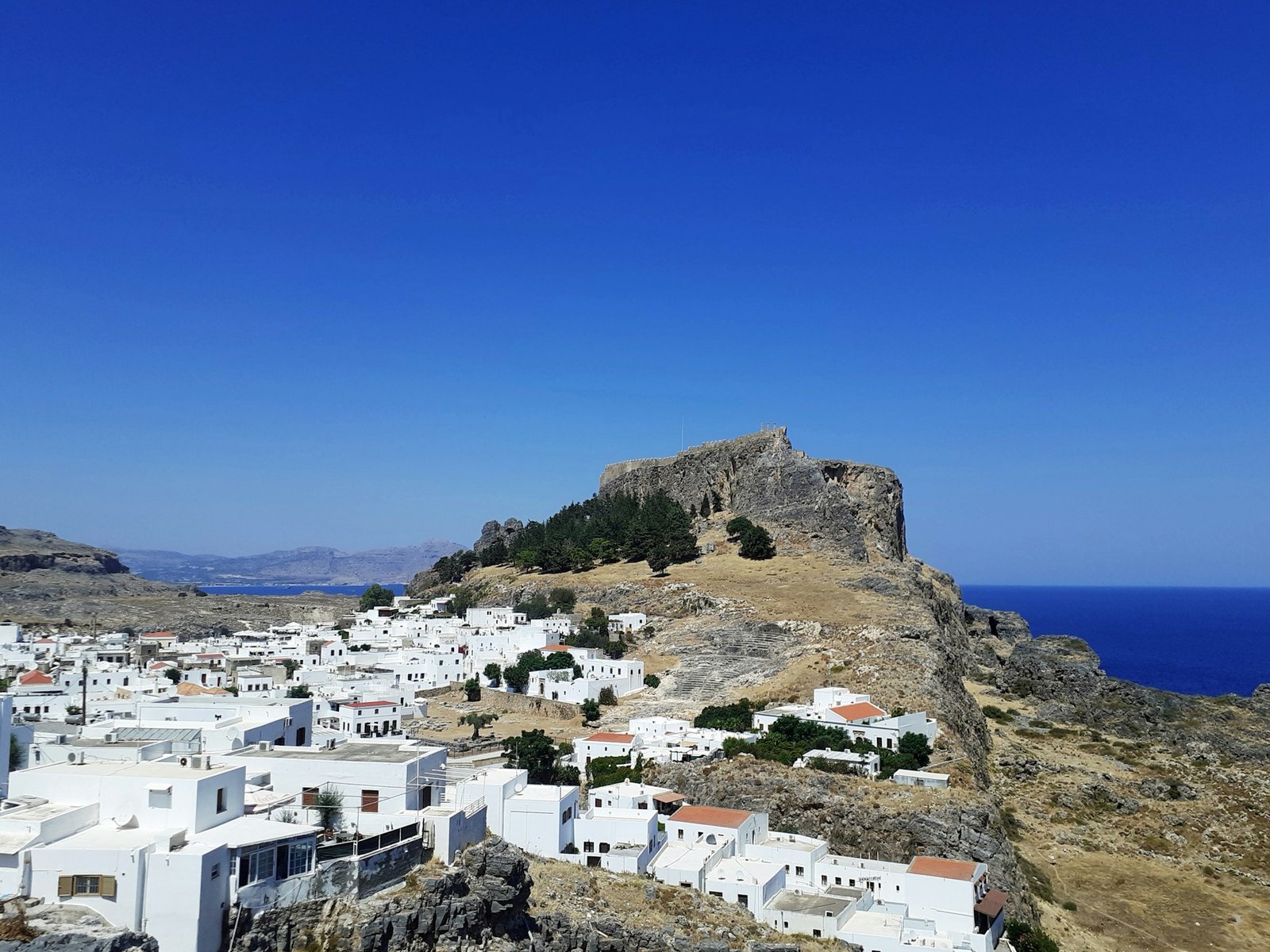
On a clear winter morning, the climb above Lindos village is a different experience from the crowded summer ascent. At the top is the sanctuary of Athena Lindia, with a 4th-century BC Doric temple and a long Hellenistic stoa. The Knights later strengthened the walls, which gave the rock much of the look it has today. Winter hours (1 November to 31 March) are 08:30–15:30, closed on Tuesdays. Tickets are €20 full and €10 reduced. Check before you travel. The village below is very seasonal, so expect many shops and tavernas to be closed in winter.
Ialysos on Filerimos Hill
Ialysos was the oldest of the island's three ancient cities, and its acropolis crowns Filerimos Hill, a short drive from Rhodes town. The site layers the remains of temples to Athena Polias and Zeus Polieus with medieval buildings. The most striking is the Monastery of the Virgin Mary, once used by the Knights. Walk the Way of Golgotha to the tall stone cross for wide views over the north-west of the island. Winter hours (1 November to 31 March) are 08:30–15:30, closed on Tuesdays. Tickets are €10 full and €5 reduced. Check before you travel.
Ancient Kamiros and the west coast
Kamiros was another of the three Dorian city-states. It was laid out on a slope above the sea on the quieter west coast. An earthquake in the late 3rd century BC destroyed it, and it was rebuilt on a larger scale, so the ruins read like a whole town spilling down the hillside. Winter hours (1 November to 31 March) are 08:30–15:30, closed on Tuesdays. Tickets are €10 full and €5 reduced. Check before you travel. Further south, the ruined Kritinia Castle (1472) looks out towards Halki and its islets. The Hellenic Heritage page lists it as free to enter, but gives no hours.
A practical note
Plan your days around the winter schedule. The five ticketed sites above close at 15:30, with last entry 20 minutes earlier, and they are all closed on Tuesdays. They also close on 25 and 26 December, 1 January and 25 March. If you can, line up the Palace, Lindos and Kamiros for a first or third Sunday, when entry is free. Outside Rhodes town and Lindos, a car makes the west-coast sites far easier. If you're relying on buses, check the current winter timetable before you set out. And pack a layer: hilltop sites like Lindos and Filerimos can be breezy even on sunny days.
The Rhodes guide
Routes with stops in order, what is in season in your travel month, and where to base yourself.
Open the Rhodes guide →Sources
- Hellenic Heritage (official ticketing) · Palace of the Grand Master
- Hellenic Heritage (official ticketing) · Archaeological Museum of Rhodes
- Hellenic Heritage (official ticketing) · Lindos
- Hellenic Heritage (official ticketing) · Ialysos
- Hellenic Heritage (official ticketing) · Kamiros
- Hellenic Heritage (official ticketing) · Kritinia Castle
- Visit Greece · The medieval town of Rhodes
- UNESCO World Heritage · Medieval City of Rhodes
Opening hours and prices were checked on 13 November 2026 and can change. Confirm with the official provider before you travel.
Next read: 7 Things to Do in Naxos in Late Autumn → · All seasonal reads